EL PAPEL DE LA OEA Y LOS MEDIOS DE COMUNICACIÓN EN LA CRISIS POLÍTICA DE BOLIVIA 2019-2020

PARTE I

PARTE II

PARTE III

No Useless Mouth: Periodizing Native Americans’ War for Independence

Age of Revolutions's avatarAge of Revolutions

By Rachel Herrmann

When does your American Revolution class begin and where does it end? Relatedly, do you include Native American histories of the conflict in your syllabus? If you don’t teach, but enjoy reading histories of the American Revolution, what dates or events would you use to bound this era if you were describing it to someone unfamiliar with it?

It’s not like historians have agreed where the Revolution begins and ends, but I also think that the periodization of Native American history significantly expands our chronological bounding of that tumultuous era. A good place to start on the periodization of the American Revolution writ large is the “Writing to and From the Revolution” forum in the Journal of the Early Republic and the William and Mary Quarterly.[1] For Native American history, I take as my beginning point the fact that several decades ago, Colin Calloway argued…

View original post 1,459 more words

The Struggles of Cuba’s Black Soldiers in an Age of Imperial Wars

Age of Revolutions's avatarAge of Revolutions

By Elena Schneider

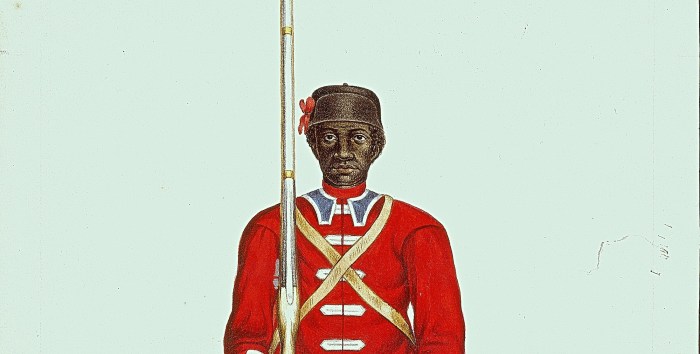
Schneider_Occupation_9781469645353_FCYou can start a book project thinking it is about one thing, but then realize in the writing that it is actually about another. When—way too many years ago—I began my study of the British invasion and occupation of Havana at the end of the Seven Years’ War, I thought I was writing a story about empires. The book would chart the clash between two competing imperial systems—their similarities and differences, convergences and divides—during a dynamic moment of imperial rivalry and reform. I was writing a book about empires, and I still did to a large extent, but when I immersed myself in the archives, I began to see that the protagonists of this battle were not those that I expected. Written all over eyewitness reports of the fighting in Havana were accounts of the critical role played by free and enslaved people of African descent. Their…

View original post 1,368 more words

Age of Revolutions Webinar on Peru’s Tupac Amaru Revolutionary Movement

Age of Revolutions's avatarAge of Revolutions

Age of Revolutions happily co-hosted a webinar event  with the Latin American and Latino/a Studies Program at Smith College on Miguel La Serna’s new book With Masses and Arms: Peru’s Tupac Amaru Revolutionary Movement (UNC Press, 2020). The discussion was facilitated by our editor Javier Puente (Smith College) and Lucia Luna-Victoria (University of California, Davis).

You can watch the full webinar here.

About the Book:

Miguel La Serna’s gripping history of the Tupac Amaru Revolutionary Movement (MRTA) provides vital insight into both the history of modern Peru and the link between political violence and the culture of communications in Latin America. Smaller than the well-known Shining Path but just as remarkable, the MRTA emerged in the early 1980s at the beginning of a long and bloody civil war. Taking a close look at the daily experiences of women and men who fought on both sides of the conflict, this fast-paced…

View original post 358 more words

Unfinished Revolutions and the Politics of Postponement in Guatemala

Age of Revolutions's avatarAge of Revolutions

This post is a part of our “Latin America’s Ongoing Revolutions” series, which explores the colonial and post-colonial angles of Latin America’s revolutionary history. Check out the entire series.

By Julie Gibbings

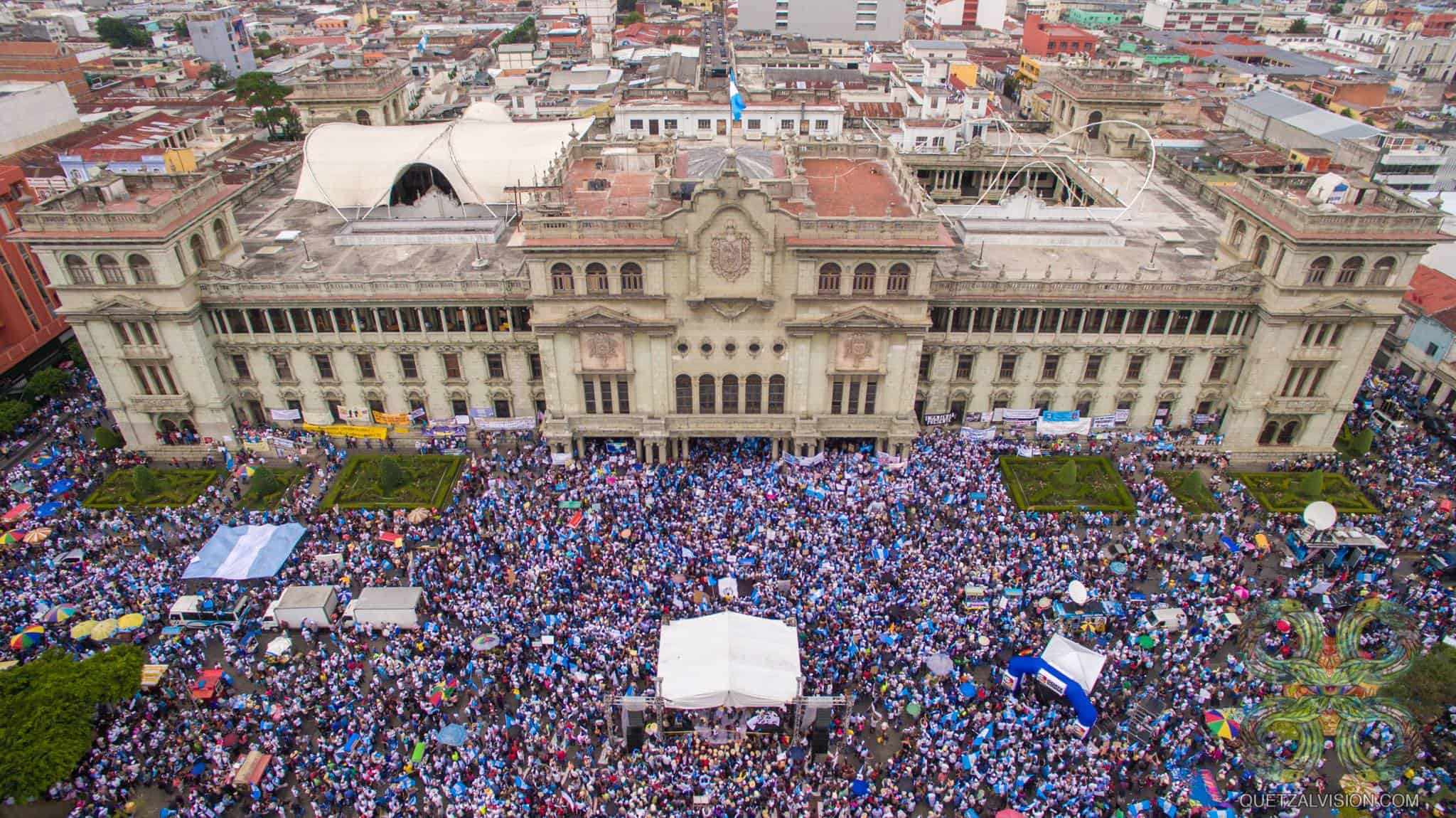
On August 27, 2015, one hundred thousand people filled the plaza in front of Guatemala’s National Palace under the banner of #RenunciaYa (Resign Now). After months of protesting, the Congress had voted 132-0 to strip President Otto Pérez Molina of his immunity from prosecution. In joyous celebration, local newspapers and social media feeds filled with images of a people who had succeeded in the pursuit of justice against corrupted government officials.

An aerial shot of protests at Guatemala’s Presidential Palace on Thursday, Aug. 27, 2015. Thousands of Guatemalans demanded President Otto Pérez Molina resign.

Across social media, protestors also circulated images juxtaposing the National Plaza in 2015 with the National Plaza some 71 years earlier…

View original post 2,067 more words

Reckoning with Revolution in Nicaragua

Age of Revolutions's avatarAge of Revolutions

This post is a part of our “Latin America’s Ongoing Revolutions” series, which explores the colonial and post-colonial angles of Latin America’s revolutionary history. Check out the entire series.

By Mateo Jarquín

“It was a beautiful revolution, but what happened is that it was betrayed.”

In 2015, Ernesto Cardenal – the beret-wearing Catholic priest, acclaimed poet, and key personality of the Sandinista Revolution (1979-1990) – delivered this appraisal of Nicaragua’s postrevolutionary legacy.[1] At the time, Latin America watched with concern as Nicaraguan democracy imploded. Daniel Ortega, president during the revolutionary 1980s and re-elected in 2006, used his office and grip over the Sandinista National Liberation Front (FSLN) to muzzle dissent and consolidate control over all branches of government. In doing so, the former Marxist rebel eschewed the Revolution’s redistributive economics and progressive social policies. He instead presided over a stunning ideological metamorphosis whereby the Sandinista Front became…

View original post 2,051 more words

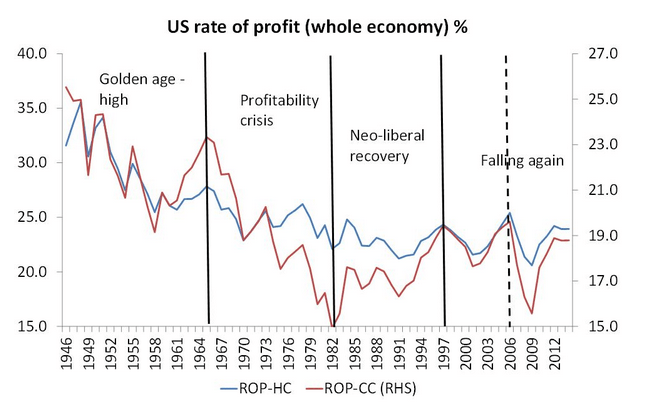
SOBRE LA LEY DE LA TENDENCIA DECRECIENTE DE LA TASA MEDIA DE GANANCIA (Raíces Unitarias y No Estacionariedad de las Series de Tiempo)

Fuente: https://www.jacobinmag.com/2016/02/goldman-sachs-capitalism-profit-recession-depression-labor-marx-surplus-value/

ISADORE NABI

ALGUNAS REFLEXIONES SOBRE LA DISTRIBUCIÓN BINOMIAL NEGATIVA II COMO INSTRUMENTO DE MEDICIÓN

ISADORE NABI

Análisis Estadístico Capital Capitalism Capitalismo Crisis Distribución Economía Economía Política Engels Estados Unidos Estadística Estadística Descriptiva Estadística Inferencial Estadística Matemática Filosofía Función Historia Historia Universal History Imperialismo Inflación Lógica Lógica Dialéctica Marx Marxism Marxismo Marxist Theory Matemáticas Materialismo Dialéctico Materialismo Histórico Political Economy Política Política Económica Precios Probabilidad Probabilidades Regresión Regresión Lineal Sistema Económico Statistics Teoría Teoría Estadística Teoría Marxiana Teoría Marxista Trabajo